
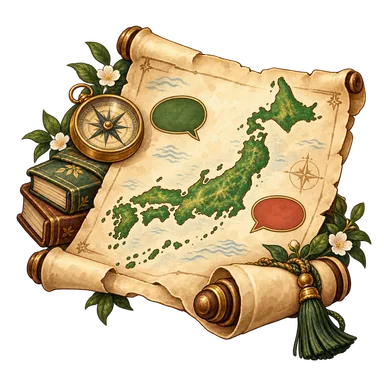
In some Kansai speech, おおきに expresses thanks and corresponds to standard ありがとう.
The idea
In some Kansai speech, おおきに expresses thanks and corresponds to standard ありがとう. A shopkeeper may use it, but speakers and situations vary. ありがとうございます is a polite standard expression; the examples below use standard Japanese.
| Japanese | Meaning |
|---|---|
| おおきに | Kansai expression of thanks |
| ありがとうございます | polite standard expression of thanks |
| すみません | standard expression used for an apology |
Examples
- 手伝ってくれて、ありがとうございます。Thank you for helping me.
- 本当にありがとうございます。Thank you very much.
- 道を教えてくれて、ありがとうございます。Thank you for telling me the way.
- 今日はありがとうございました。Thank you for today.
- お茶をどうもありがとうございます。Thank you very much for the tea.
- いつもありがとうございます。Thank you for everything you always do.
Read-aloud uses a synthetic Japanese voice available on your device. Voice quality and availability vary; it does not assess your pronunciation.
No Japanese device voice is available. You can still read the text and use the linked listening resources.
Watch out
Do not assume every person in Kansai says おおきに or that it fits every relationship. すみません can mean “sorry” or “excuse me” and can also express gratitude in context.
Try it yourself
Choose the Japanese form for “Kansai expression of thanks”: (おおきに/ありがとうございます)
Show answer or example answer
おおきに
おおきに matches “Kansai expression of thanks”; ありがとうございます matches “polite standard expression of thanks”.
Choose the Japanese form for “polite standard expression of thanks”: (すみません/ありがとうございます)
Show answer or example answer
ありがとうございます
ありがとうございます matches “polite standard expression of thanks”; すみません matches “standard expression used for an apology”.
Choose the Japanese form for “standard expression used for an apology”: (すみません/おおきに)
Show answer or example answer
すみません
すみません matches “standard expression used for an apology”; おおきに matches “Kansai expression of thanks”.
Practice round
Answer questions, then rebuild Japanese sentences where available. We keep your score.
Choose the Japanese form for “Kansai expression of thanks”: (おおきに/ありがとうございます)
Choose the Japanese form for “polite standard expression of thanks”: (すみません/ありがとうございます)
ありがとうございます
Choose the Japanese form for “standard expression used for an apology”: (すみません/おおきに)
Tap the words in the right order.
Tap the words in the right order.
Tap the words in the right order.
Keep your progress
Sign up for free to save your practice results in your account.
Sign up to saveI already have an accountUse it today
Use the reference to make two sentences of your own about this topic. Read them aloud and compare them with the examples.